
Module 2: Understanding Gender-Based Violence (GBV)

📖 Chapter Overview
Welcome & emotional safety
Welcome to this module on Understanding Gender-Based Violence. Gender-based violence is a complex phenomenon, which has multiple yet overlapping manifestations. Despite this, as you will learn in this chapter, it is worryingly pervasive. In the light of this and of the potential that the topic has to trigger painful memories and emotions, please make sure to engage in self-care whilst familiarising yourself with the content of this chapter and more generally, of this course. This might entail taking breaks and returning to the platform at a time when you feel better prepared from an emotional and mental point of view to engage with the topic, as well as pacing yourself whilst going through the course.
If You Are a Youth Worker Understanding gender-based violence (GBV) is vital to your role as a youth worker. Young people, particularly adolescent girls and gender-diverse youth, are at high risk of experiencing different forms of GBV—ranging from physical and sexual violence to psychological abuse and digital harassment. Research shows that approximately one in three women in the EU has experienced physical or sexual violence in their lifetime by any perpetrator (FRA, 2024), and emerging data highlights increasing rates of cyber violence among young people (EIGE, 2022).
Youth workers operate in non-formal educational settings that offer unique opportunities to contribute to primary prevention—an approach focused on preventing violence before it occurs by addressing its root causes, such as harmful gender norms and power imbalances (WHO, 2019). Through thoughtful educational activities and open discussions, youth workers can help shape young people’s understanding of respect, equality, and consent.
In addition to prevention, youth workers play a critical role in recognising and responding to cases of GBV. Being trained to identify signs of violence, provide initial support, and follow safe referral practices can make a significant difference in a young person’s life. This includes having clear processes in place to act ethically and responsibly when GBV is suspected or disclosed (Council of Europe, 2011).
Finally, a strong foundation in GBV knowledge also equips youth workers to support other youth workers and adults in their communities, including colleagues and possibly themselves. It fosters a culture of safety, accountability, and care in both professional and personal spaces.
If You Are a Young Person Talking about violence might feel uncomfortable or even a little scary at first. But learning about it is actually part of learning about ourselves—our bodies, our feelings, our thoughts, and how we connect with others. Gender-based violence (GBV) isn’t just something that happens “somewhere else.” It can affect young people in many ways, and it can happen in different relationships—between people who are dating, friends, classmates, educators, family members, or even strangers. It can also show up in the places we spend time, like school, sports clubs, youth spaces, and online.
Learning about GBV helps us understand the signs of unhealthy or unsafe behaviour—like control, pressure, fear, or disrespect. When we understand these signs, we’re more likely to recognise when something isn’t okay in our own lives or in someone else’s, and we’re more prepared to take action or ask for help.
Technology and social media are a big part of our everyday lives, but they can also be used to hurt or control others—for example, through online harassment, unwanted messages, or sharing private images without permission. That’s why it’s especially important for young people today to know their rights and feel confident setting boundaries—online and offline.
Talking openly about violence is also about creating safer communities. It’s about taking care of our own wellbeing and supporting the wellbeing of others. Even small actions—like listening to a friend, standing up for someone, or challenging harmful jokes—can make a big difference. When we understand violence, we’re better able to prevent it. We become not just safer ourselves, but stronger allies to others.
Research shows that talking with young people about healthy relationships, respect, and safety—especially in schools and youth settings—can help prevent violence and promote wellbeing for everyone (UNESCO, 2018).
Chapter’s Learning Objectives
Chapter’s Learning Objectives By the end of this module, you will be able to:
🧬 Unit 1: What is Gender-based violence
Understanding gender
Before we delve into definitions of gender-based violence, it is important that we are clear about what we mean by gender. Understanding gender is a crucial first step before engaging in conversations about gender-based violence (GBV). Gender is often misunderstood as being limited to binary categories (male/female), when in fact it encompasses a complex set of dimensions, including gender identity, gender expression, biological sex, and attraction (Killermann, 2013). Clarifying these concepts can help move beyond stereotypes and recognise how rigid gender norms and misunderstandings can contribute to violence, discrimination, and exclusion. As the Council of Europe notes, GBV is rooted in unequal power relations and socially constructed gender roles (Council of Europe, 2011), making it essential to begin with a shared understanding of what gender means. In order to reach this understanding, we can use the Genderbread Person. The Genderbread Person is a helpful visual tool that teaches us that gender is not a single, fixed category, but a combination of different aspects of who we are. It breaks gender down into four key components: gender identity (how we see ourselves in terms of gender), gender expression (how we present ourselves through clothing, behaviour, or voice), biological sex (the physical characteristics we’re born with), and attraction (who we are romantically or sexually drawn to). These aspects exist on spectrums, rather than in strict categories like “male” or “female.” This model helps us understand that every person’s experience of gender is unique and that assumptions based on appearance or stereotypes can be misleading and harmful.
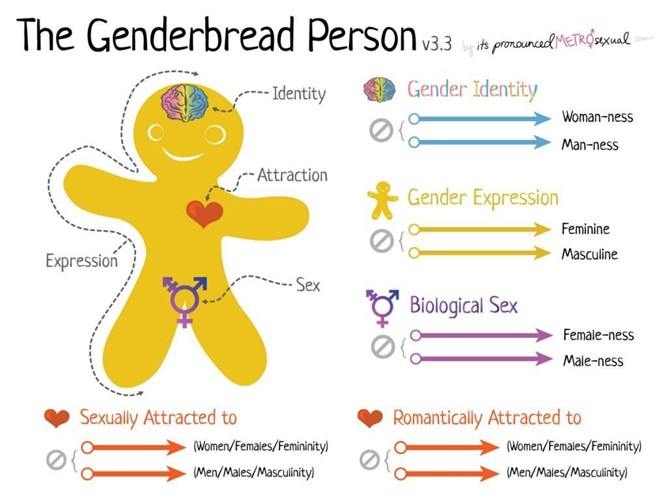
Grasping the complexity of gender through tools like the Genderbread Person is conducive to clarifying the nature and dynamics of gender-based violence (GBV). GBV takes place within a broader context of systemic inequalities and patriarchal power relations and as such, victims/survivors are targeted because of their gender, with women and girls being disproportionately victimised (WHO, 2019). At the same time, people who express their gender in ways that challenge traditional ideas —such as members of the LGBTIQA+ community—may be targeted because of their gender identity, perceived gender or gender expression for example by “not acting like a man” or “not dressing like a woman.” This violence is often rooted in efforts to police or punish those who defy binary or stereotypical roles related to “masculinity” and “femininity” (EIGE, 2022). Moreover, even violence by men against men who do not belong to the LGBTIQA+ community can be gendered in that it can be a way to reassert hegemonic masculinity (Perry, 2005; Silberschmidt, 2001). Recognising gender as multi-dimensional allows us to understand that GBV affects primarily women and girls, but also people of diverse gender identities and expressions, particularly those who are marginalised or stigmatised because of how they live their gender or sexuality (Council of Europe, 2011; EIGE, 2022). Before you move any further – take this mental note: some individuals and groups are at greater risk of experiencing GBV, but anyone can be the target of violence.
Another useful concept to keep in mind when thinking about GBV is intersectionality. This concept, coined by Kimberlé Crenshaw in 1989, is commonly used to describe individuals’ location and the intersections of interlocking mechanisms and systems of oppression such as sexism, ageism, classism, racism, and more. When thinking about GBV we need to keep intersectionality in mind, because gender intersects in important ways with other aspects of an individual identity, often creating specific and intersecting vulnerabilities and experiences of abuse. An example of this concerns how gender and migrant status intersect creating greater vulnerability to intimate partner violence (IPV) among migrant women who may depend on their partners/spouses for residence permits in host countries (Jelenic, 2019).

The main statistic you have to keep in mind is 1 in 3 women will experience physical or sexual violence in their lifetime. Very often this violence this violence takes place early on in life and is at the hand of intimate partners.

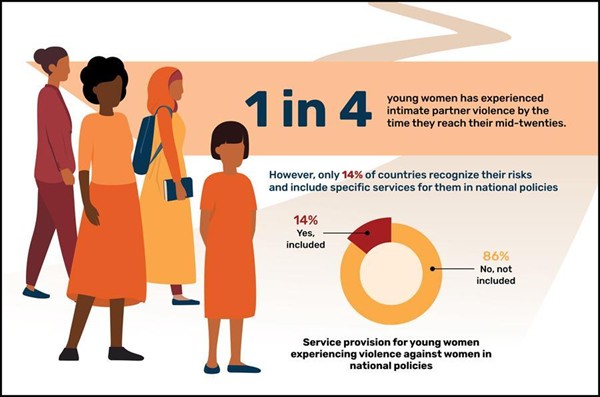
Looking at relevant intersections, recent FRA data sheds light on aspects of discrimination targeting LGBTIQA+ communities – with a specific focus on intersex people in the infographic below – which often spiral into violence, including of a sexual nature.

When thinking about GBV among youth, you may want to check out statistics relative to your country. For instance, data from Italy speaks to a worrying rise in controlling behaviours symptomatic of coercive control (see below for a better understanding of what this means) via technological means among young people (IPSOS & Save the Children, 2024) Bear in mind that statistics vary from country to country, are not always readily available – especially when it comes to individuals at the intersections of different forms of oppression – and never tell the whole story. It is common to refer to the “dark figure of crime”, namely the crime that is not reported and thus is not recorded. A lot more violence and abuse are taking place than what the official statistics tell us, as research shows that many people may struggle to identify their experience as one of violence or do not open up about the abuse, including for fear and shame.
EU and international documents and definitions Key European definitions recognise structural inequalities, emphasising the disproportionate burden experienced by women. A landmark document in the field of GBV which we can turn to for a thorough definition of GBV is the Council of Europe’s Istanbul Convention. The Istanbul Convention, formally known as the Convention on Preventing and Combating Violence Against Women and Domestic Violence, represents the only legally binding international treaty designed to protect individuals—particularly women—from all forms of gender-based violence (Council of Europe, n.d.). Since its opening for signature in 2011, nearly all Council of Europe member states have either signed or ratified it. Notably, Italy, Spain, Germany, and the Netherlands have all completed both steps, demonstrating their commitment to implementing its comprehensive standards and strengthening protections at national level. This commitment also translates into ensuring national legal documents reflect the definitions of GBV used in the Convention and that adequate measures stemming from them are put into place. As regards definitions, the Council of Europe Istanbul Convention recognises that women are the main targets of GBV and defines “gender-based violence against women” as violence that is directed against a woman because she is a woman or that affects women disproportionately’ (p.3). The DIRECTIVE (EU) 2024/1385 OF THE EUROPEAN PARLIAMENT AND OF THE COUNCIL of 14 May 2024 on combating violence against women and domestic violence, another key document in the field of GBV, echoes the definitions included in the Istanbul Convention. Another useful definition of GBV, which builds upon the insights stemming from the Genderbread person is the one employed by the International Planned Parenthood Federation (2022) where GBV is defined as “any harmful act that is perpetrated against a person’s will [and thus without their consent] and is based on gender norms and unequal power relationships”.
You should keep in mind that in the European Union, GBV is addressed both by national legal and policy documents – which include specific legislation such as Criminal Codes, dedicated legal acts, Gender Equality Strategies outlining educational, awareness-raising and other measures – and at the EU level. You have already learned about relevant EU documents, such as the Istanbul Convention and the Directive on violence against women and domestic violence. Other important legal documents are the Anti-Trafficking Directive, the Victims of Crime Directive, the Directive on the sexual abuse and exploitation of children and pornography. Alongside legal documents, policy documents such as the Gender Equality Strategy 2020-2025. While these legal and policy documents are quite complex, it is just important to know that they exist and the role that they have in the EU in directing prevention, protection and prosecution efforts.
For information on your national framework check out: Italy: ISTAT. (n.d.). Normativa italiana. In Violenza sulle donne – Statistiche per temi. Istituto Nazionale di Statistica. Retrieved June 26, 2025, from https://www.istat.it/statistiche-per-temi/focus/violenza-sulle-donne/il-contesto/normativa-italiana/ Greece: General Secretariat for Equality and Human Rights. (n.d.). Legislation. Ministry of Social Cohesion and Family. Retrieved July 8,2025, from https://isotita.gr/nomothesia/ Spain: (n.d.). Delegación del Gobierno contra la Violencia de Género. Normativa. Ministerio de Igualdad. Retrieved July 21,2025, from https://violenciagenero.igualdad.gob.es/marconormativo/ Netherlands: Ministry of Health, Welfare and Sport. (2023). Combating Gender-Related Violence. Government of the Netherlands. Retrieved July 29, from https://www.rijksoverheid.nl/documenten/rapporten/2023/09/22/aanpak-gendergerelateerd-geweld Centraal Bureau voor de Statistiek. (2024). Emancipation Monitor 2024: Socially safe living. Government of the Netherlands. Retrieved July 29, from https://longreads.cbs.nl/emancipatiemonitor-2024/sociaal-veilig-leven/
🧷 Unit 2: Forms of GBV
Understanding different forms of GBV
Gender-based violence has various manifestations and being aware of them is instrumental to better identifying them. The Istanbul Convention (2011), which you learned about in Unit 1 details various forms of GBV including: physical, verbal, psychological, sexual, and socio-economic violence.
1. Physical Violence Definition: Any act intended to cause physical harm or injury to another person. Example: Hitting, slapping, choking, pushing, or using weapons against someone.
2. Verbal Violence Definition: The use of degrading, humiliating, intimidating, or threatening language against another person. Example: Name-calling, shouting insults, issuing threats of harm, or stigmatising someone based on their gender.
3. Psychological Violence Definition: Behaviours that cause mental or emotional harm through manipulation, control, or intimidation. Example: Gaslighting (“You’re imagining things”), isolating the person from friends or family, persistent surveillance, or threats to harm them or someone they care about.
4. Sexual Violence Definition: Any form of non-consensual sexual act or act seeking sexual gratification, as well as coercion or exploitation in sexual matters. Example: Rape, sexual assault, forcing someone into unwanted sexual activity, or sexual harassment.
5. Socio-Economic Violence Definition: Actions that limit a person’s access to or control over economic resources, employment, or social participation. Example: Controlling a partner’s income, preventing them from working or studying, restricting access to the family home, or limiting their ability to manage finances.
Please note that the list above is not exhaustive – e.g. under sexual violence one should include reproductive violence, which has to do with controlling and curtailing a person’s free exercise of reproductive rights, from use of contraceptives, access to abortion and other. Moreover, one form of violence does not exclude the other. For instance, it is increasingly common in the context of intimate partner relationships to talk of coercive control to identify a frequent pattern of abuse where different forms of GBV coexist and overlap (Myhill & Hohl, 2019; Macdonald et al., 2024; Tolmie et al., 2023)
It is important to note that these forms of GBV can take place in the private and intimate sphere – at home – as well as in the public sphere – at work, at school, at uni, at a youth club, on the street. Perpetrators can include family members, current or former intimate partners, people whom we consider friends, co-workers, bosses, acquaintances and strangers. It is crucial to note that GBV can and does also take place online. Given the increased rise in GBV perpetrated online, it is now common to refer to technology-facilitated GBV (often preferred to as online or cyber violence, because it emphasises how technology is used as means).
Sexual harassment and stalking are among the most frequently reported types of technology-facilitated GBV. Common tactics include the non-consensual sharing of intimate images (image-based sexual abuse), persistent unwanted messages, intrusive phone calls, and harmful social media posts. Victims/survivors may be targeted through comment sections, overwhelmed with explicit content, or even tracked using GPS and location-sharing apps. This form of digital abuse often extends beyond screens, having serious consequences in their offline lives as well. What is crucial to keep in mind is that technology has both enhanced and worsened existing forms of GBV, but also created new forms of abuse, such as deepfakes. Fake digital content which involves manipulation of someone’s photos or videos to make them of a sexualised nature, or to use them to threaten, intimate or humiliate the person involved in a GBV dynamic. Deep fakes can also involve AI-generated images of GBV. If you’re interested in learning more about all the different types of TFGBV, please check out this summary on the Violenciadigital website as well as the dedicated course module on this topic.
🕊️ Unit 3: Recognising the signs
Recognising the signs of GBV
Recognising the signs of GBV is a very important step in prevention. Identifying early warning signs of abuse can go a long way toward preventing the escalation of violence and youth workers, educators, bystanders, and even peers have a key role in this. At the same time, recognising violence requires also a mindful, respectful, informed and coordinated approach. Given the sensitivity of the matter at hand, before intervening, you should consult with experts in the field. This should not discourage you from taking action, but rather should prompt you to reflect on how to intervene in the most effective manner, minimising potential side-effects and risks, in each and every situation.
These are generic signs – different forms of violence are generally associated with specific signs. Moreover, there is no one sign of GBV and the specificities of each situation and individuals concerned should always be taken into account.
You should also keep an eye out for language and beliefs as these can be important warning signs of toxic masculinity and endorsement of gender stereotypes that might be conducive to violence. Use of misogynistic, homophobic, or transphobic slurs; expressing beliefs that normalise male dominance or justify violence (“She asked for it,” “Boys will be boys”); endorsing gender stereotypes around emotional expression, strength, or sexual activity (Connell, 2005) are all symptoms of problematic masculinity. Toxic/hegemonic masculinity refers to cultural norms that associate masculinity with dominance, suppression of emotions, and aggression (Connell, 2005). These ideas often encourage boys and young men to devalue empathy, view control as strength, and equate violence with power. Please note that when these beliefs are expressed by women and girls, they speak to internalised patriarchal norms as a result of socialisation and should also be addressed via ad-hoc interventions and educational measures.
Common expressions of toxic/hegemonic masculinity include the suppression of emotional vulnerability (“man up”); the acceptance or glorification of aggressive sexual behaviour; and peer pressure to conform to dominant behaviour, often at the expense of others (Connell, 2025).
Spending time on forums spreading misogynistic views of women is also a common expression of toxic masculinity and a warning sign of abusive behaviour. Such digital spaces are often referred to as the ‘manosphere’ where users engage in anti-feminist and misogynistic discourse, often rooted in feelings of sexual entitlement, male victimhood, and rejection by women (Ging, 2019, p. 639). Many young people are vulnerable to Incel discourse, as the Netflix documentary “Adolescence” (2025) has shown. Youth who are exposed to these beliefs may either: perpetuate violence (as perpetrators) or internalise harm (as victims or silent bystanders).
Gender Stereotypes Fuel GBV by reinforcing power imbalances, minimising the seriousness of abuse against women, LGBTIQA+ individuals, and boys and silencing victims who don’t fit the “ideal victim” profile (Our Watch, 2021; WHO, 2021).
📚 References
- Anti-Trafficking Directive, (Directive 2011/36/EU of the European Parliament and of the Council of 5 April 2011 on preventing and combating trafficking in human beings and protecting its victims, and replacing Council Framework Decision 2002/629/JHA).
- Banyard, V. L., Plante, E. G., & Moynihan, M. M. (2007). Rape prevention through bystander education: Bringing a broader community perspective to sexual violence prevention. U.S. Department of Justice. https://www.ojp.gov/pdffiles1/nij/grants/208701.pdf
- Borges Jelinic, A. (2019). I loved him and he scared me: Migrant women, partner visas and domestic violence. Emotion, Space and Society, 32, 100582. https://doi.org/10.1016/j.emospa.2019.100582
- Connell, R. W. (2005). Masculinities (2nd ed.). University of California Press.
- Council of Europe. (2011). Convention on preventing and combating violence against women and domestic violence (Istanbul Convention). https://www.coe.int/en/web/istanbul-convention
- Council of Europe. (2011). Istanbul Convention: Council of Europe Convention on preventing and combating violence against women and domestic violence. https://www.coe.int/en/web/istanbul-convention
- Council of Europe. (n.d.). Types of gender-based violence. In Gender Matters – The Council of Europe’s database on gender equality. https://www.coe.int/en/web/gender-matters/types-of-gender-based-violence
- Directive 2011/92/Eu of the European Parliament and of the Council of 13 December 2011 on combating the sexual abuse and sexual exploitation of children and child pornography, and replacing Counil Framework Decision 2004/68/JHA.
- Directive 2012/29/EU of the European Parliament and of the Council of 25 October 2012 establishing minimum standards on the rights, support and protection of victims of crime, and replacing Council Framework Decision 2001/220/JHA.
- European Commission. Directorate General for Communication. (2020). Striving for a Union of equality: The gender equality strategy 2020–2025. Publications Office. https://data.europa.eu/doi/10.2775/671326
- European Institute for Gender Equality. (2022). Cyber violence against women and girls. https://eige.europa.eu/publications/cyber-violence-against-women-and-girls
- European Institute for Gender Equality. (2022). Gender-based violence. https://eige.europa.eu/gender-based-violence
- European Union Agency for Fundamental Rights. (2024). EU Gender-Based Violence Survey: Key Results. https://ec.europa.eu/eurostat/documents/7870049/20464303/KS-01-24-013-EN-N.pdf/052adbe2-40bd-9472-87c0-ed14c7106bfa?version=1.0&t=1732193841491
- Ging, D. (2019). Alphas, betas, and incels: Theorizing the masculinities of the manosphere. Men and Masculinities, 22(4), 638–657. https://doi.org/10.1177/1097184X17706401
- International Planned Parenthood Federation. (2022). Chapter 10: Sexual and Gender-based Violence. https://www.ippf.org/sites/default/files/ippf_cccg_chapter_10_sgbv.pdf
- ISTAT. (n.d.). Normativa italiana. In Violenza sulle donne – Statistiche per temi. Istituto Nazionale di Statistica. Retrieved 10 June 2025, from https://www.istat.it/statistiche-per-temi/focus/violenza-sulle-donne/il-contesto/normativa-italiana/
- Killermann, S. (2013). The Genderbread Person v3.3. It’s Pronounced Metrosexual. https://www.itspronouncedmetrosexual.com/2015/03/the-genderbread-person-v3/
- Myhill, A., & Hohl, K. (2019). The “Golden Thread”: Coercive Control and Risk Assessment for Domestic Violence. Journal of Interpersonal Violence, 34(21–22), 4477–4497. https://doi.org/10.1177/0886260516675464
- Our Watch. (2021). Changing the story: A shared framework for the primary prevention of violence against women and their children in Australia (2nd ed.). https://media.ourwatch.org.au/publications/Changing-the-story-framework.pdf
- Perry, B. (2005). Masculinities, social change, and development. In L. Ouzgane & R. Morrell (Eds.), African masculinities: Men in Africa from the late nineteenth century to the present. Palgrave Macmillan.
- Silberschmidt, M. (2001). Disempowerment of men in rural and urban East Africa: Implications for male identity and sexual behavior. World Development, 29(4), 657–671.
- Tolmie, J., Smith, R., & Wilson, D. (2023). Understanding Intimate Partner Violence: Why Coercive Control Requires a Social and Systemic Entrapment Framework. Violence Against Women, 30(1), 54–74. https://doi.org/10.1177/10778012231205585
- Types of gender violence facilitated by technology | La Violencia Digital es Real. Retrieved 10 June 2025, from https://violenciadigital.tedic.org/en/b/guia/types-of-gender-digital-violence/
- UN Women. (2020). The shadow pandemic: Violence against women during COVID-19. https://www.unwomen.org/en/news/in-focus/in-focus-gender-equality-in-covid-19-response/violence-against-women-during-covid-19
- UN Women. (2024). Documenting reproductive violence: Unveiling opportunities, challenges, and legal pathways for UN investigative mechanisms. https://www.unwomen.org/en/digital-library/publications/2024/09/research-paper-documenting-reproductive-violence-unveiling-opportunities-challenges-and-legal-pathways-for-un-investigative-mechanisms
- UN Women. (2025). FAQs: Digital abuse, trolling, stalking, and other forms of technology-facilitated violence against women. Retrieved 10 June 2025, from https://www.unwomen.org/en/articles/faqs/digital-abuse-trolling-stalking-and-other-forms-of-technology-facilitated-violence-against-women
- UN Women Australia. (n.d.). Intersectionality explained. Retrieved June 26, 2025, from https://unwomen.org.au/our-work/focus-area/intersectionality-explained/
- UNESCO. (2018). International technical guidance on sexuality education: An evidence-informed approach (2nd ed.). https://unesdoc.unesco.org/ark:/48223/pf0000260770
- World Health Organization. (2019). RESPECT women: Preventing violence against women. https://www.who.int/publications/i/item/9789241515856
- World Health Organization. (2021). Violence against women prevalence estimates, 2018: Global, regional and national prevalence estimates for intimate partner violence against women and global and regional prevalence estimates for non-partner sexual violence against women. https://www.who.int/publications/i/item/9789240022256
- World Health Organisation. (2021). Devastatingly pervasive: 1 in 3 women globally experience violence. Retrieved 10 June 2025, from https://www.who.int/news/item/09-03-2021-devastatingly-pervasive-1-in-3-women-globally-experience-violence
- World Health Organization. (2021, December 10). Tracking progress towards a world without violence against women. Retrieved June 26, 2025, from https://www.who.int/news-room/feature-stories/detail/tracking-progress-towards-a-world-without-violence-against-women
[gbv_quiz_module_2]